鑫景福致力于滿足“快速服務,零缺陷,輔助研發”PCBA訂購單需求。


行業新聞
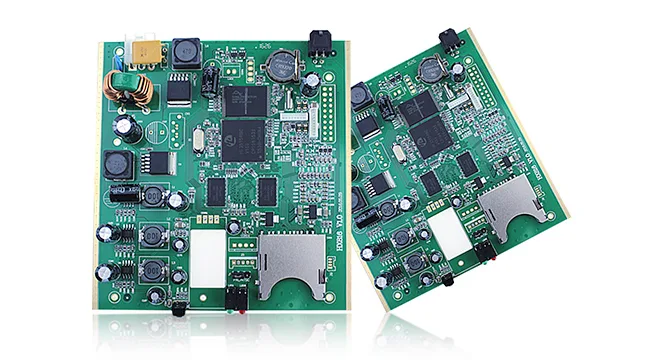
If some preventive measures are not taken in the pcb design process for printed circuit board and bluetooth technology, problems such as interference, data loss and poor signal integrity may occur. We will outline many rules and guidelines to consider when selecting Bluetooth technology for a given applICation, more specifically, designing it into a circuit board.
Design of bluetooth pcb
Bluetooth is used by a variety of applications, including:
Beacons used in shopping malls
Eddystone Framework for Industrial Sensing Applications
Headphones and audio/stereo products
Remote peripherals, such as video game controllers or computer mouse/keyboard
Home automation system
Wireless consumer electronics applications, including CAMeras, printers, and phones
Each application contains the same general Bluetooth technology, but uses it in different ways. According to the connection type, design engineers need to combine basic principles to optimize signal integrity and overall equipment efficiency.
Bluetooth is not a very fast wireless option compared to Wi Fi, but it is becoming faster. It also cannot pass through walls and other nearby obstacles well, and its range is poor.
It is still a good choice, although it is under development (5.0 is the latest update, which is better than 4.2). In most cases, it is a fairly low-power, reliable, secure, and widely supported option that can be easily implemented on a variety of SMAll peripherals.
Bluetooth has existed for more than 20 years and is still developing. Although it has improved in terms of speed, power, range, security and other attributes over the years, it still seems to have some SIMilar problems since it was proposed in the mid-1990s, including its sensitivity to signal interference.
From the point of view of, how to optimize signal integrity and minimize interference and packet loss?
The following are some considerations and general rules of thumb for Bluetooth Circuit PCB design:
Using the authentication module
1. If you integrate Bluetooth into the product and have limited resources, please consider using pre certified, fully included modules to help speed up development and time to MARKet. It may eventually add some cost, but it usually prevents some trouble caused by antenna placement/design and EMI sensitivity.
At present, there are several certified modules with reasonable prices on the market, most of which are integrated with small ARM processors, such as the RN4020 or RN4870 of Microchip, or the BT121 or BGM113 of Silicon Labs. The onboard processor can provide greater flexibility and functions. For example, in addition to the Bluetooth stack, it can also control simple peripherals through GPIO, SPI, I2C, PWM, etc.
Check your Bluetooth device selection
2. Make sure you select the appropriate Bluetooth device for the application, and the antenna size and adjustment are also appropriate.
If you are looking for a simple beacon application, and you only need to advertise the location or data in a short time/interval, you can use a cost-effective solution with low power consumption (Bluetooth low power consumption or BLE), minimum functions and peripherals to save on board real estate and final costs.
If you are looking for Bluetooth applications with higher throughput, audio streaming, or data exchange, you may need some with higher Tx power, higher Rx sensitivity, and faster data rates (although slower data transfer rates) that generally help minimize dropped packets).
If you are looking for an all-in-one chip, consider using a chipset that contains powerful or auxiliary processors, including available UART, SPI, I2C, PWM, ADC, DAC, and GPIO pins.
If you are dealing with work that relies heavily on RSSI readings, make sure that its RSSI monitor has sufficient dB resolution.
Separating or removing copper signals and high energy components
3. When designing the PCB circuit in the bluetooth chipset or module, keep the antenna area completely away from nearby copper signals or components carrying a lot of energy (especially switched power paths, such as boost or buck converters).
This also includes keeping areas (and plies) free of planar and polygonal pours. Most Bluetooth chipset manufacturers provide layout guidelines that should be followed closely during PCB design. If you manually lay out the antenna area, use a ground plane as appropriate to maintain good bandwidth at the input and ensure that sufficient space is left for the tuning elements (print and ceramic antennas require a ground plane).
Use grounding to sew vias to prevent harmful radiation from PCB edges, as it may penetrate nearby Bluetooth signals. If possible, try to optimize the shape of the circuit board according to the location of the Bluetooth device and its antenna, so that it is at the edge and away from nearby components and signals. If you use analog based signals (such as audio), make sure that the analog and digital ground planes are separate.
It is always a good idea to shield Electronic devices (not antennas, of course) to prevent cross coupling and minimize picked up noise.
Power Precautions
4. Make sure that the guide rail supplying the Bluetooth module or chip is clean, and use bypass (1.0 uF) and decoupling capacitor (0.1 uF and 10 nF) when necessary. You can also optionally use ferrite beads on the power rail that enters the Bluetooth area of the circuit board to suppress high-frequency noise.
Tools and Analysis
5. If you are designing the antenna area, please ensure that you have appropriate equipment (such as network analyzer) to analyze and adjust the matching network, or consider sending the design to the third-party RF test laboratory.
Consider obstacles in the real world
6. In the process of Bluetooth connection, there are many things that can cause blocking or detuning, including nearby water (human beings are also... we are mainly composed of water), metallized objects, smartphones/tablets, computers, and operating devices in the same ISM band, such as microwave ovens or WLAN technology, power supplies, radio frequency video, office lighting, and home phones.
Even when pairing at close range (1-2 meters), it is also vulnerable to signal loss. If the risk of such factors affecting the signal quality is high, select equipment with higher power and run at a slower speed to minimize packet loss. Or, if the pcb device is inside the enclosure, make sure that the metallized material is minimized and away from the BLE module. The relationship between Bluetooth signal strength and distance is not linear. In fact, it is very nonlinear and unpredictable according to the surrounding environment.




抖音二維碼

Q Q二維碼

微信二維碼
點擊
然后
聯系
然后
聯系
電話熱線
13410863085Q Q

微信

- 郵箱