鑫景福致力于滿足“快速服務,零缺陷,輔助研發”PCBA訂購單需求。


行業新聞

Discussion on Oxidation resistance of Copper Surface in PCB Production
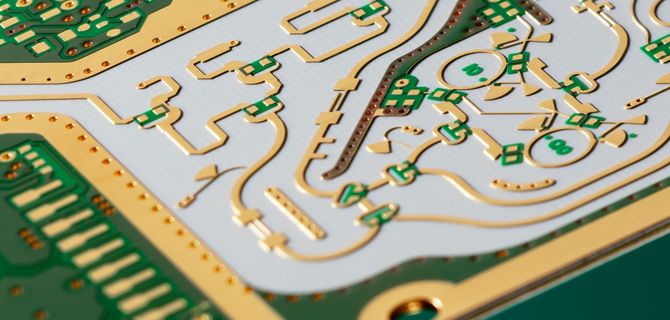
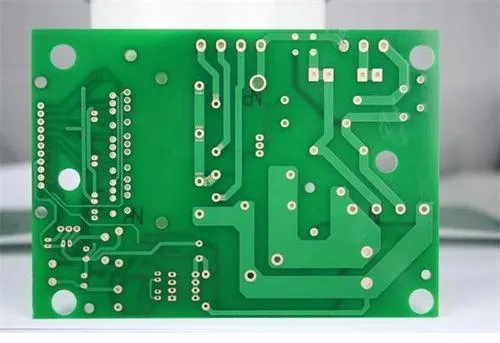
At present, in the production process of double-sided and multilayer PCB boards, during the operation cycle of copper deposition, PCB electroplating and pattern transfer, the oxidation of copper layers on the board surface and in holes (from SMAll holes) seriously affects pattern transfer and operation. Production quality of pattern electroplating; In addition, the oxidation of inner laminates leads to the addition of false spots in AOI scanning, whICh seriously affects the testing efficiency of AOI. Such incidents have always been a headache in the industry. Now we will solve this problem and use copper to do some antioxidant research.
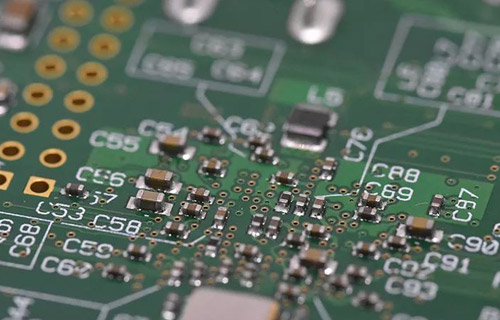
PCB board

1. Methods and status quo of copper surface oxidation in current PCB production process
1.1 Copper DIPping - oxidation resistance of whole plate after electroplating
In general, most plates will be treated with: (1) 1-3% dilute sulfuric acid after copper immersion and electroplating; (2) High temperature drying at 75-85 ℃; Paste dry film or print wet film for graphic transfer; (4) In this process, the board needs to be placed for at least 2-3 days and at most 5-7 days; (5) At this time, the copper layer on the plate surface and in the hole has already been oxidized to "black". In the pretreatment of pattern transfer, the copper layer on the plate is usually treated in the form of "3% dilute sulfuric acid+grinding". The inner part of the hole is only treated by pickling, and it is difficult to achieve the desired effect in the previous drying process; Recall that the oxidation degree of pores is usually higher than that of pores due to dryness and incomplete moisture. The surface of the circuit board is much more serious, and the oxide layer that is difficult to remove can only be removed by pickling. This may cause the circuit board to be scrapped because there is no copper in the hole after pattern electroplating and etching.
1.2 Oxidation resistance of inner layer of Multilayer board
Generally, after the inner circuit is completed, it is developed, etched, stripped and treated with 3% dilute sulfuric acid. Then it is stored and transported through the membrane separated pipeline, waiting for AOI scanning and testing; Although the operation and transportation will be very careful in this process, the surface of the board will inevitably have fingerprints, stains, oxidation spots, etc. Defects; During AOI scanning, a large number of false points will be generated, and AOI testing is based on the scan data, that is, all scan points (including false points) must be tested, which leads to very low AOI testing efficiency.
2. Discussion on the introduction of copper surface antioxidant
At present, many PCB pharmaceutical suppliers have introduced different copper surface antioxidants for production; Our company also has SIMilar products, which are different from the final copper surface protection (OSP) and are suitable for PCB production. Copper surface antioxidant syrup process; The main working principle of the syrup is to form covalent bonds and composite bonds with organic acids and copper atoms, and to replace each other to form chain polymers. A multilayer protective film is formed on the copper surface, so that no redox reaction occurs on the copper surface, no hydrogen is produced, and it plays an antioxidant role. According to our use and understanding in actual production, copper surface antioxidants generally have the following advantages:
1) Simple process, wide application range, easy to operate and maintain;
2) Water soluble process, free of halide and chromate, favorable for environmental protection;
3) The obtained anti-oxidation protective film is very simple and only needs the traditional "pickling+grinding" process;
4) The obtained anti-oxidation protective film will not affect the welding efficiency of the copper layer, and will hardly change the contact resistance.
2.1 Application of oxidation resistance after copper deposition - full plate electroplating
In the process of copper deposition - after the whole electroplating plate, "dilute sulfuric acid" becoMES "copper surface antioxidant", and other operation methods such as drying and subsequent insertion or stacking remain unchanged; In this process, a thin and uniform anti-oxidation protective film will be formed on the surface of the board and the copper layer in the hole, which can completely isolate the surface of the copper layer from the air, prevent sulfide in the air from contacting the copper surface, and make the copper layer oxidized and blackened; Under normal conditions, the effective storage period of the antioxidant protective film can reach 6-8 days, fully meeting the operation cycle of general plants. In the pre-treatment of pattern transfer, the common "3% dilute sulfuric acid+grinding" method can only be used to quickly and thoroughly remove the anti-oxidation protective film on the surface and in the hole of the plate, without any impact on the subsequent process.
2.2 Anti oxidation application of multilayer board inner layer
The procedure is the same as that of conventional treatment. It is only necessary to change the "3% dilute sulfuric acid" on the level production line to use "copper surface antioxidant". Drying, storage, transportation and other operations remain unchanged; After such treatment, a thin and uniform anti-oxidation protective film will also be formed on the board surface, which will completely isolate the copper layer surface from the air, so that the board surface will not be oxidized. At the same time, it also prevents fingerprints and stains from directly contacting the board surface, reduces false spots during AOI scanning, and thus improves the testing efficiency of AOI.
3. Comparison of AOI scanning and testing of inner laminates treated with dilute sulfuric acid and copper surface antioxidant respectively
The following is a comparison of AOI scanning and test results of inner laminates of the same model and batch number treated with dilute sulfuric acid and copper surface antioxidant respectively, each 10PNLS.
Note: It can be seen from the above test data that:
1) The false number of AOI scanning of inner laminates treated with copper surface antioxidant is less than 9% of inner laminates treated with dilute sulfuric acid;
2) AOI test oxidation point of inner laminates treated with copper surface antioxidant is 0; The AOI test oxidation point of inner laminates treated with dilute sulfuric acid is 90.
4. Summary
In short, with the development of the circuit board industry and the improvement of product grade; Copper free scraping of small holes caused by oxidation and low testing efficiency of AOI inner and outer layers need to be vigorously solved in the production process of PCB; The appearance and application of antioxidants provide good help to solve these problems. It is believed that in the future PCB production process, the use of copper surface antioxidants will become more and more popular.


抖音二維碼

Q Q二維碼

微信二維碼
點擊
然后
聯系
然后
聯系
電話熱線
13410863085Q Q

微信

- 郵箱