鑫景福致力于滿足“快速服務(wù),零缺陷,輔助研發(fā)”PCBA訂購單需求。


行業(yè)新聞
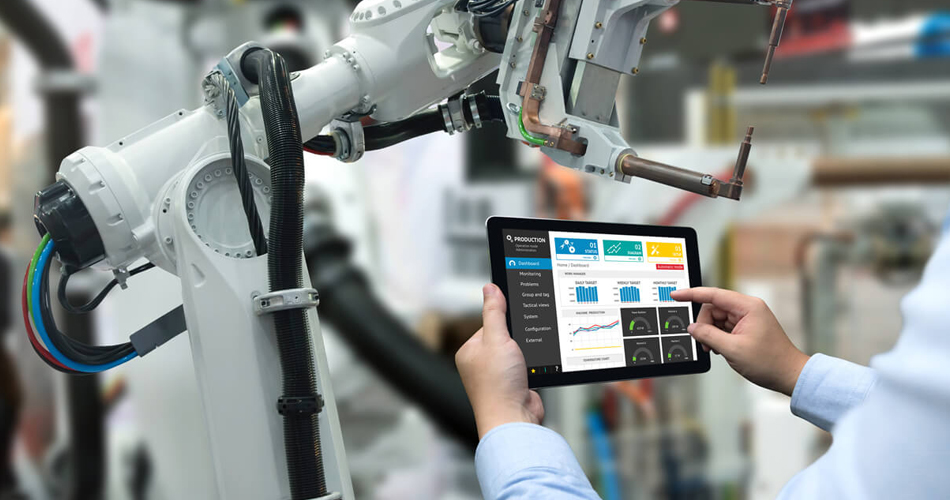
How does PCBA electronIC processing plant import MES system correctly?
The circuit board manufacturer explains how to correctly import the MES system
In recent years, with the rise of digital, intelligent and other concepts, more and more enterprises have contacted and realized the importance of MES (Manufacturing Execution System). Many electronic companies try to realize the transformation of enterprises from extensive management to refined management in one step through the introduction of MES, and dream of "changing guns overnight". However, due to the lack of foundation for the survival of MES in enterprises, the introduction of MES can not achieve the intended goal. On the contrary, because the MES project requires department collaboration, business restructuring, and full participation, it not only affects normal production, but also attacks the confidence of employees. In the end, "people and money are empty" and nothing is done.
1、 Correctly import MES system
In November 1990, AMR (Advanced Manufacturing Research) formally proposed the concept of MES (Manufacturing Execution System). In 1997, MESA proposed 11 functional components and integration models of MES (Figure 1), and obtained the average benefits that can be achieved by implementing MES after counting many successful MES projects.
2、 Improve enterprise capability with MES
In fact, as a means and tool of informatization, MES itself does not have the function of improving enterprise capabilities. What can really help enterprises to improve their capabilities is that in the process of MES introduction, according to the industry characteristics and their own advantages, they can transform and optimize the production and operation processes, and create production management capabilities that match MES.
III. Basic conditions for MES implementation
——Beat production mode
Through the transformation of the rhythm production mode of the production line, the standardized operation, balanced production, just in time material procurement/distribution, total quality management, exception management and automation of the enterprise will be promoted. When the enterprise can achieve a certain degree of rhythmic production, it means that the enterprise has the basic conditions to implement MES. On this basis, through the introduction of MES, information technology is used to replace the original manual methods (task release, commencement/work reporting, man hour statistics, quality inspection, quality traceability), so as to further realize the timely, accurate and fast transmission of information. At the same time, with the help of computer quality analysis, exception analysis, man hour analysis and other rapid statistical analysis and display functions, it is easier to find on-site problems, promote on-site improvement, and improve the production management level through PDCA cycle.
MES is gradually formed with the continuous development and innovation of production management. Therefore, the introduction of MES is not a one-time process, and it needs to be implemented step by step in modules and workshops, with the first principle of "not adding worthless actions".
For the plan management module, there are three types of scheduling: dynamic scheduling, sEMI-automatic scheduling and automatic scheduling.
Plan management module
1. Manual Scheduling: The system is mainly responsible for information transfer tasks such as plan approval and distribution. The planner can distribute the plan according to the actual situation.
2. Semi automatic scheduling: The order delivery date is required to be relatively stable, the scheduling algorithm is relatively fixed, and the yield rate is high. After the system schedules the specified order, the planner can manually adjust the scheduling results to show the first to next relationship of each task in each operation in the form of a Gantt chart.
3. Automatic scheduling (advanced planning scheduling): It is mainly aimed at the production mode with complex data logic, complex constraints and large scale (correct results cannot be obtained quickly by manual work). It is necessary to clearly distinguish various constraints, and the parameter values of each constraint need to be extracted, stabilized and improved based on a solid management foundation.
Plan execution module
1. Whether the key parts need error proofing, whether the key process parameters need to be prompted, whether the operation instructions need to be displayed with the work order and other issues need to be designed and optimized in combination with the actual operation.
2. If there is no demand for this content in the actual management, and the design is only based on universality or reference to the application cases of other enterprises, the auxiliary role of the operation itself will be lost and the practicality will be lacking.
For the exception management module, the system generally provides exception reporting, processing, and analysis functions. In practical applications, enterprises are required to first establish exception handling systems and assesSMEnt requirements. Only when the actual exception system plays a role can it be further solidified and improved after being imported into the system, otherwise this module will only increase the burden on workers.
For the quality management module, it generally includes material inspection, WIP inspection, product inspection, as well as the entry and processing of product defects, and the automatic integration of testing equipment.
Quality management within the scope of MES
MES can achieve in-process control and post inspection in the quality management module. In order to truly improve product quality, enterprises need to pay more attention to quality planning and prevention in advance by combining multiple dimensions of product research and development, production process and manufacturing process. Only relying on the information system can not solve the problems of production management and production operation.
For the equipment management module, it generally includes the basic file, routine check/repair plan and implementation, fault reporting and processing functions of the equipment. For the import of this module, the purpose of device management is often ignored.
Purpose of equipment management
1. The ultimate purpose of equipment management is to serve production planning and production execution. Through the plan management of equipment, the production scheduling results are more accurate;
2. The production quality is guaranteed through routine inspection and maintenance of equipment. On this basis, it is necessary and practical to introduce this module.
In a word, the demand of MES comes from the actual production management demand. Only when an enterprise first has a certain management foundation and demand foundation can it bring its real value into play by introducing MES.
4、 Application of MES in the Transformation of Enterprise Production Management
Build the production and operation capacity of the enterprise through lean management; Replace the repetitive labor of workers through automation to improve the process quality; On this basis, further tap the potential of enterprises and enhance their competitiveness by means of informatization, digitalization and intelligence.
Compared with developed countries, the production management of a large part of our enterprises is still in the extensive management stage, lacking the basic conditions for implementing MES. However, due to the increasing MARKet pressure, enterprises have to rely on the introduction of MES to accelerate the improvement of enterprise competitiveness. In the face of such difficulties, in the process of MES import, the top leaders of enterprises should focus more on the problem of "matching MES with basic management". Identify the main management problems that affect the development of the enterprise, and import the corresponding MES components to solidify and improve while optimizing management. With the improvement of management capabilities, the MES functions will be upgraded or adjusted again to match the improved management and operation capabilities. The management ability and technical means will be continuously optimized and improved.
The internal problems of enterprises are usually complex, and production problems are often the last link in the enterprise problem chain. This has also LED to the transformation of the enterprise's demand for MES from the original "single workshop" demand to the "whole value chain solution from sales, research and development to production and delivery" demand. This transformation not only requires MES manufacturers to have corresponding enterprise management knowledge and horizontal system integration capabilities, but also requires enterprise managers to correctly understand their own problems, solve enterprise problems step by step, and achieve comprehensive improvement of enterprise competitiveness.
Finally, in the process of MES implementation, we must pay attention to: tailoring and transforming the MES functions according to the enterprise's own management needs, focusing on the issues that have significant impact at this stage. Never blindly pursue "big and comprehensive, more is better".
The MES system is a production management system with production scheduling as its core and complete functions. All the basic data it needs can be generated and maintained within the MES system. However, MES users generally use the MES system and ERP system at the same time, and the connection of the two software in data and function will bring maximum benefits to users. This article will introduce how the MES system connects with other software according to the data transmission direction of "from ERP to MES" and "MES to ERP", so that users can get the maximum benefit.
The above is about circuit board manufacturing, circuit board design, and circuit board manufacturers to explain how to correctly import the MES system.



抖音二維碼

Q Q二維碼

微信二維碼
點擊
然后
聯(lián)系
然后
聯(lián)系
電話熱線
13410863085Q Q

微信

- 郵箱